

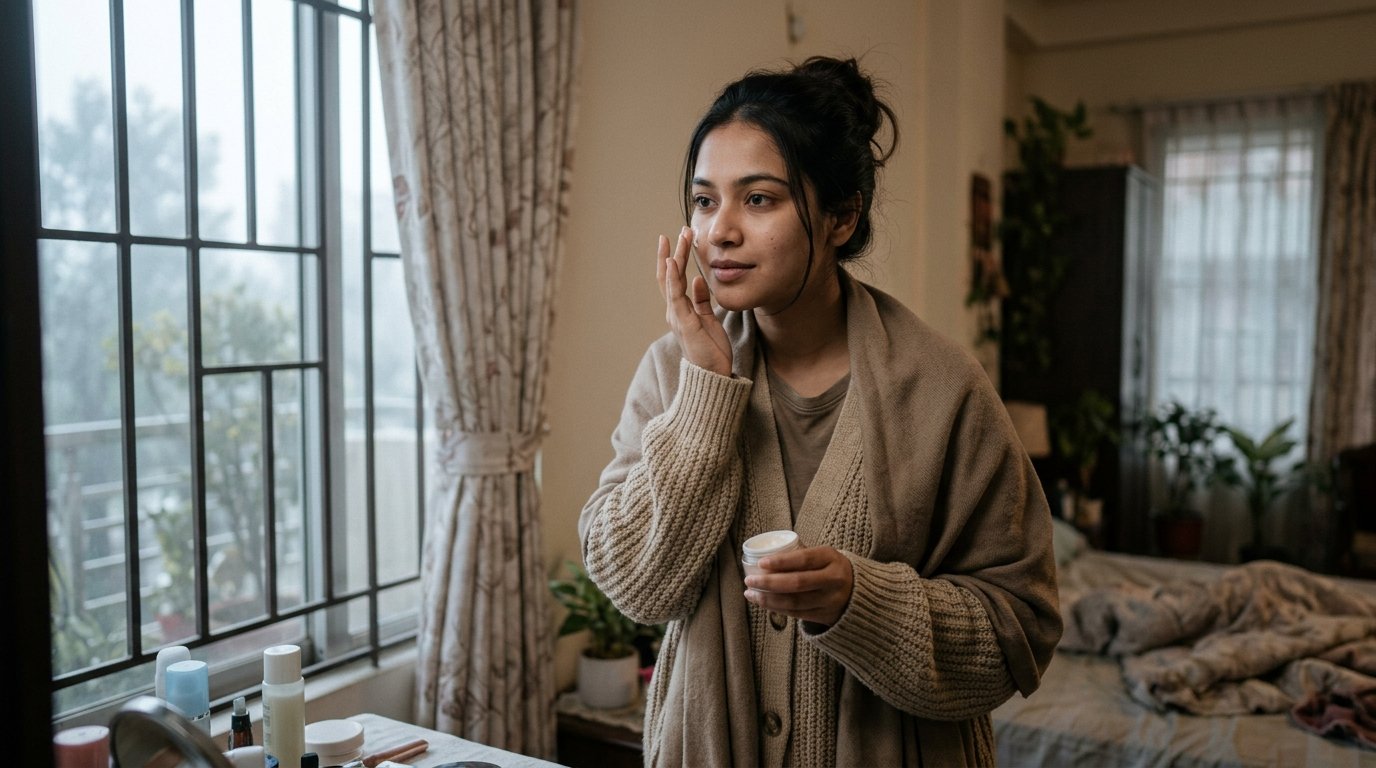
You stand in front of the mirror one morning and notice it: your cheeks feel tight, the corners of your lips are cracked, and your hands feel like sandpaper. Yesterday, everything seemed fine. That’s how winter arrives, quietly, and the first thing it hits is your skin.
The science behind it is simple. Winter air holds less moisture, so water evaporates from your skin faster. The outermost layer, your skin barrier, weakens. That’s when dryness, itching, and irritation begin. The good news is that a few small habits can win this fight.
1. Keep Your Bath Water Lukewarm
It’s hard to resist a steaming shower on a cold morning. But very hot water strips away the natural oils your skin depends on. Dermatologists recommend lukewarm water and keeping showers within about 10 minutes.
2. Moisturize Right After Bathing
Moisturizer locks in hydration best when your skin is still slightly damp. Check the label for glycerin, ceramides, or hyaluronic acid. In winter, a thick cream usually works better than a thin lotion.
3. Be Gentle When Washing Your Face
Harsh face washes and frequent scrubbing are enemies of winter skin. Cleanse with a mild, fragrance-free cleanser, and exfoliate no more than once or twice a week.
4. Don’t Skip Sunscreen in Winter
Less sun doesn’t mean less damage. UVA rays penetrate clouds and slowly contribute to signs of aging. Start your day with a sunscreen of SPF 30 or higher.
5. Care for Your Skin from Inside and Out
If the air at home is very dry, a humidifier can help. Keep lip balm for your lips and hand cream within reach. Drinking enough water and eating nutritious food matter for overall health, though evidence that water alone relieves dry skin is fairly limited. External care does most of the work.
Many of us only look after our skin once a problem shows up. But your skin has never asked for luxury, only a little attention. This winter, set aside just five minutes a day for yourself. Look into the mirror and say, “I’m taking care of you.” If dryness turns into severe itching, redness, or cracked, painful skin, please consult a dermatologist.