

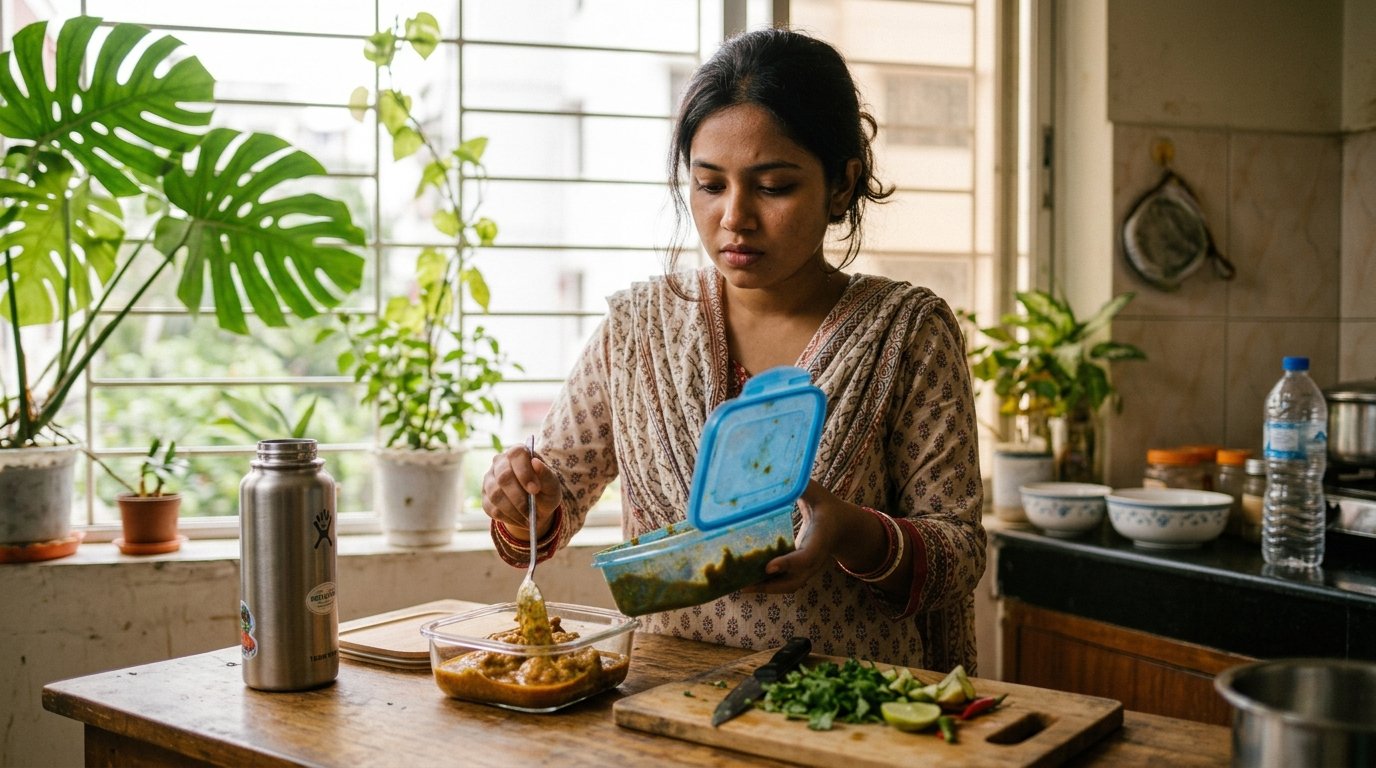
You drink water from a plastic bottle, reheat leftovers in a plastic container in the microwave, ordinary habits you’ve probably never thought twice about. Yet research shows these small daily habits are exactly how invisible microplastic particles keep entering our bodies.
Researchers have already found microplastics in human blood, lungs, liver, kidneys, and even the brain. Researchers at the University of New Mexico found brain tissue can carry up to 20 times more microplastic than other organs. A 2025 study published in Nature Medicine found higher concentrations of microplastics in the brains of people with dementia compared to those without the disease. You can’t eliminate microplastic exposure entirely, but a few simple habit changes can meaningfully cut it down. Here’s how.
1. Skip bottled water
A 2024 study found that a one-liter bottle of plastic-bottled water can contain around 240,000 micro and nanoplastic particles, 90 percent of them being extremely tiny nanoplastics. Bottled water generally carries about double the microplastics found in tap water. Carrying a refillable stainless steel or glass bottle filled with filtered water is the better option.
2. Stop heating food in plastic
Microwaving food in plastic containers releases significant amounts of microplastics and nanoplastics into your food, with some studies finding counts reaching into the millions or billions. Always transfer food out of plastic into glass or ceramic before heating.
3. Retire plastic cutting boards
Cutting on a plastic board lets knife friction shave off microplastic particles directly into your food. Switching to a wood or bamboo cutting board avoids this risk entirely.
4. Store food in glass or steel
Storing food in plastic containers or cling wrap allows the plastic to degrade over time and leach into the food, especially with hot or oily dishes. Glass, steel, or ceramic containers are the safer choice.
5. Keep plastic items out of the dishwasher
The high heat in a dishwasher speeds up the release of microplastics and chemicals from plastic items. Hand washing plastic containers with warm water is the better habit.
6. Cut back on processed food
Processed and fast food typically contains higher levels of microplastics and phthalates, plasticizers that leach in through plastic packaging and processing. Leaning toward fresh, less processed food is an effective way to lower microplastic exposure.
7. Swap sea salt for rock salt
Studies have found relatively higher microplastic levels in sea salt, since ocean water itself is heavily contaminated with microplastic pollution. Choosing an alternative like Himalayan pink salt or rock salt helps reduce this exposure.
8. Watch for invisible indoor sources
Microplastics don’t just come from food, they enter your body from inside your own home too. Synthetic fibers on sofas or carpets, cleaning products, and household dust all release tiny plastic particles into the air. Since we spend so much of our time indoors, regular cleaning and good ventilation help cut down this exposure.
9. Choose natural fiber fabrics and shower curtains
Synthetic fabrics like polyester or nylon shed large amounts of microfiber every time they’re washed. Choosing natural fibers like cotton or linen, and swapping a vinyl or PVC shower curtain for a cotton or linen one, helps reduce exposure.
10. Look for personal care products without plastic packaging
Everyday items like shampoo, soap, and lotion often come in plastic bottles, and that plastic can degrade with prolonged use. Plastic-free alternatives like bar soap and bar shampoo, or products packaged in glass, metal, or paper, are a simple swap.
Fully avoiding microplastics isn’t realistic in today’s world, they’re woven into the air, water, and soil everywhere. But experts say avoiding the biggest sources brings the biggest benefit, especially cutting out bottled water and heating food in plastic. No single change will make a dramatic difference overnight, but over time, these habits can meaningfully reduce the amount of microplastic that accumulates in your body.