

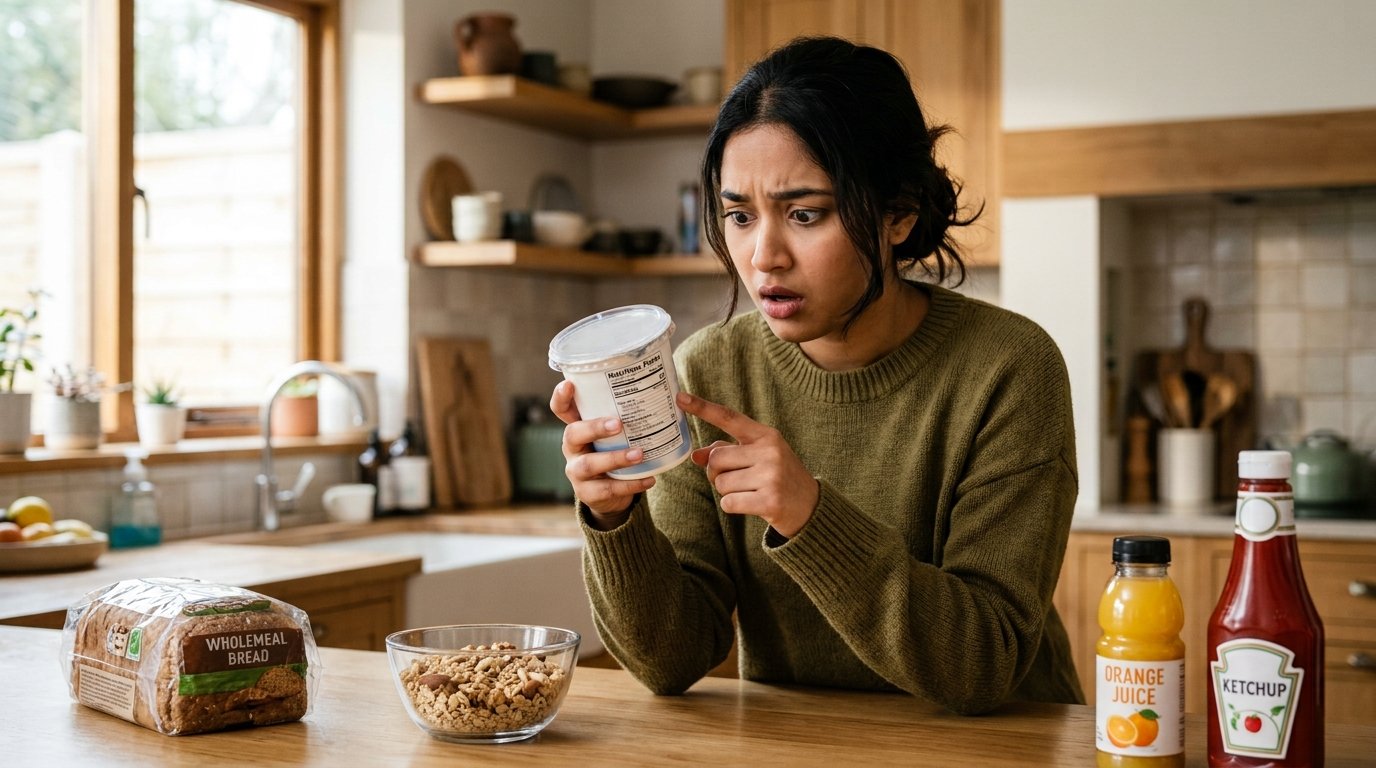
You’ve cut out sweets, ice cream, chocolate, everything, trying to be health conscious, yet the weight isn’t coming off and your blood sugar still isn’t behaving. The problem might not be in the sweet foods at all, it might be hiding in foods you’d never think to call sweet. Ketchup, yogurt, bread, even pasta sauce can carry hidden sugar, despite tasting nothing like dessert.
One report found that around 74 percent of packaged foods contain added sugar, including products labeled “healthy” or “natural.” Let’s look at exactly where this hidden sugar tends to show up in everyday food.
Flavored yogurt, healthy-seeming but not always
Yogurt is generally seen as a healthy food, packed with probiotics and protein. But flavored yogurt can carry a shocking amount of sugar. A typical six-ounce container of strawberry-flavored yogurt can contain up to 32 grams of sugar, more than a Snickers bar. Plain Greek yogurt, by comparison, contains only about 5.5 grams in the same serving size. Choosing plain yogurt and adding fresh fruit gives you the flavor with far less sugar.
Energy or protein bars, healthy in name only
The assumption that all protein bars are low in sugar is wrong. Chocolate or fruit-flavored bars in particular can carry nearly an entire day’s worth of sugar in a single snack. Checking the “Added Sugars” line on the label is the single most important habit here.
Ketchup and packaged sauces
A single tablespoon of ketchup contains about 4 grams of sugar. Pasta sauce, barbecue sauce, salad dressing, all of these taste savory or tangy, yet they often carry added sugar to boost flavor. Any tomato-based sauce naturally contains some sugar, but commercial versions frequently add extra sugar on top of that.
Granola, instant oatmeal, and cereal
These foods sound healthy, but they’re often loaded with various sweeteners like corn syrup, brown sugar, honey, or dextrose. Granola bars with chocolate chips or a yogurt coating can carry 8 to 12 grams of sugar per serving. Swapping a one-ounce granola bar for one ounce of plain granola brings the sugar content down to around 5 grams.
Milk and coffee creamer
Milk naturally contains some sugar, but chocolate, vanilla, or strawberry flavored milk and coffee creamers often have extra sugar added. It’s worth checking the label before reaching for a flavored version.
Commercial bread
Many commercial breads contain added high-fructose corn syrup, even though bread doesn’t taste sweet at all. Looking for whole-grain bread labeled “no added sugar” is a good habit here.
Malted beverages and juice
Malted drinks or health drinks that seem wholesome can also hide plenty of sugar. Canned or bottled juice may be convenient, but it often lacks fiber while carrying a high amount of added sugar. Erica Kenney, a nutritionist at the Harvard T.H. Chan School of Public Health, describes sweetened beverages as essentially “liquid candy.”
What the daily limit actually is
The American Heart Association recommends women keep added sugar under 6 teaspoons, or 25 grams, a day, and men under 9 teaspoons, or 36 grams. The World Health Organization’s guidance is even stricter, recommending sugar make up less than 5 percent of total daily calories. But hidden sugar makes staying within that limit surprisingly hard, since a single protein bar or one bowl of flavored yogurt can eat up almost the entire daily allowance.
Reading labels is your biggest protection
The CDC recommends checking the “Added Sugars” line specifically when buying packaged food, not just “Total Sugars,” since fruit and milk naturally contain some sugar that isn’t a cause for concern. For protein bars or yogurt, it’s also worth checking whether protein content outweighs sugar content.
Avoiding sugar isn’t just about cutting out dessert, it’s about building the habit of reading labels. A “healthy” label on a product doesn’t automatically mean it’s actually low in sugar. Choosing less processed food where possible, and flipping the label over before buying, can
make the biggest difference in the long run.