

It’s the 1st of the month. Your salary hits your bank account. You feel confident—“This month I’ll save properly. Maybe travel a little. Maybe invest in a new skill.”
But by the 15th, you open your banking app and think: “Where did all the money go?” If this feels familiar, you’re not alone.
Thousands of young professionals in Bangladesh live the same cycle— EMIs on the phone, sending money home, rides on Pathao or Uber, food deliveries, Daraz shopping, subscriptions you barely use… Salary gone. The month is still running.
The problem isn’t that you earn too little. The problem is that there’s no system.
The good news? This cycle can be broken—with mindset shifts and a few simple money techniques.
Your Problem Is Not Income—It’s the System
Most people believe, “If I earned more, I’d save more.” But in reality, saving isn’t about income—it’s about structure.
Budgeting scares people. They think it means cutting joy out of life. But budgeting isn’t restriction—it’s direction. If you master a few money management techniques before 30, your 30s and 40s become dramatically easier. Let’s break down the five techniques that actually work.
Technique #1: Pay Yourself First
Most people save what’s left after expenses. But usually, nothing is left. Flip the system. The moment your salary arrives, transfer money to your savings or investment account—before paying anyone else.
Start small:
- Salary 50,000 BDT → Save 2,500–10,000 BDT (5–20%)
- Increase gradually as income grows
Smart move:
Set up an automatic transfer on payday. If you don’t see the money, you won’t spend it.
Technique #2: Track Your Money (See Where It’s Leaking)
You can’t control money you don’t track. Divide expenses into three categories:
Fixed Expenses: Rent, internet, electricity
Variable Expenses: Food, transport, medical
Leakages: Unnecessary spending
In Bangladesh, common leakages include:
- Ride-sharing instead of buses
- Daily food delivery
- Impulse Daraz purchases
- Multiple unused subscriptions
7-Day Expense Audit Challenge
For seven days, write down every expense—even 20 taka. After one week, patterns will shock you.
Technique #3: Control Lifestyle Inflation
Your salary increases. Your expenses rise immediately. Result? You earn more—but save the same. This is called Lifestyle Inflation.
The “First Raise Rule”
Whenever your salary increases:
- Save at least 50% of the raise
- Use the rest for lifestyle upgrades
Upgrade value, not show-off:
- Health checkups, books, family support = value
- Buying expensive brands to impress others = expense
Technique #4: Build an Emergency Fund (Your Financial Oxygen)
Job loss. Medical emergency. Family crisis. Without savings, you fall into:
- Loans
- Credit card debt
- Stress and panic
An Emergency Fund protects your peace.
How much?
-
3–6 months of living expenses
If monthly expenses = 30,000 BDT
Target = 90,000–180,000 BDT
Where to keep it?
- Savings account
- FDR with early withdrawal
- Liquid funds
Never in locked or risky investments.
Emergency Fund Ladder
Don’t aim big at once:
1 month → 3 months → 6 months
Slow, steady, stress-free.
Technique #5: Invest Early (Time Is Your Biggest Asset)
Many people say: “I’ll invest once I earn more.” That’s a mistake. In investing, time matters more than amount.
Start with beginner-friendly options:
- DPS
- Mutual funds
- Savings certificates
- Small learning investments in the stock market
Start Small Rule
Even 500–2,000 BDT per month is enough to begin. Consistency beats size.
3 Small Habits That Change Everything
1. Control Debt
If you’re stuck in EMI or credit card debt, use the Snowball Method:
- Pay the smallest debts first
- Gain momentum
- Move to bigger ones
2. Subscription Detox
Cancel unused OTT platforms, apps, and courses. You’ll easily save 1,000–2,000 BDT per month.
3. The 24-Hour Rule
Before impulse buying:
- Add to cart
- Wait 24 hours
- Decide again
Most “needs” disappear by tomorrow.
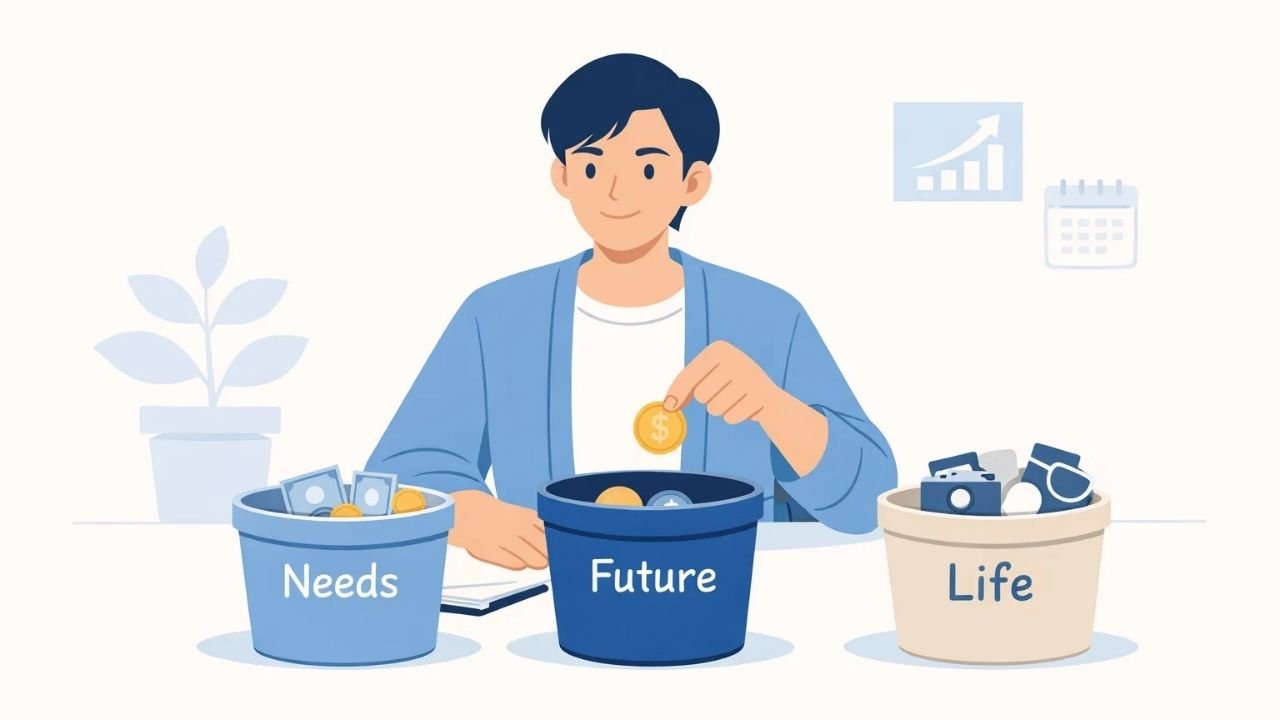
One Simple System: The 3-Bucket Budget
Too many rules feel overwhelming? Use this simple system:
Bucket 1: Needs (50–60%)
Rent, food, transport, bills
Bucket 2: Future You (20–30%)
Savings, emergency fund, investments
Bucket 3: Life (20–30%)
Fun, travel, gifts, hobbies. This system works whether you earn:
- 20,000 BDT
- 50,000 BDT
- Or more
Percentages stay the same.
Money Doesn’t Fix Life—Systems Do
You don’t need to become rich before 30.
Your real goals should be:
- Low or zero debt
- A solid emergency fund
- Strong money habits
Achieve these, and the next decades feel lighter.
Start Today:
- 7-day expense tracking
- 21-day “Pay Yourself First” challenge
And ask yourself: Where is my biggest money leakage?
Small steps. Consistent habits. That’s how financial freedom begins. And the best time to start? Today.