

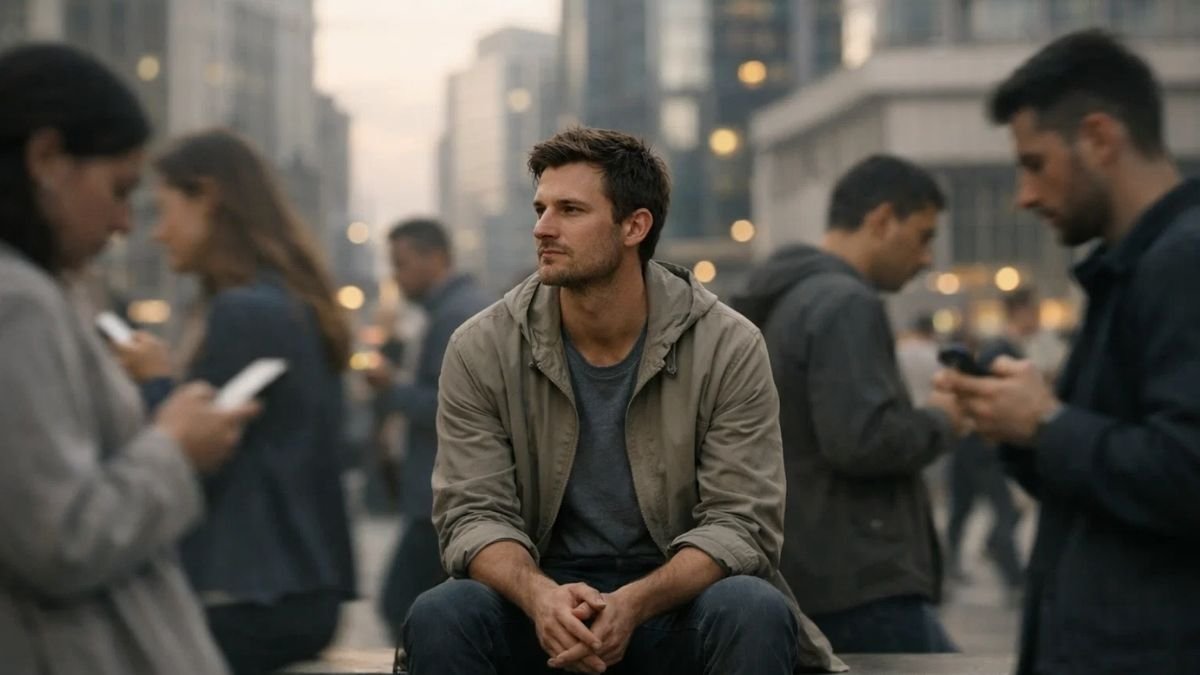
Every day we talk to so many people. Messages come and go. Phone notifications ping constantly. Meetings with colleagues, chats with friends, meals with family. Yet why does it feel like there’s an emptiness inside? Why does it seem like no one truly understands?
This loneliness didn’t arrive suddenly. It crept in slowly, so gradually that we didn’t even notice when we drifted apart from each other. Behind the glitter of modern life hides a silent crisis—we’re becoming lonely even while surrounded by people.
We’re More Connected Than Ever, Yet More Alone
Look at how many contacts are in our phones. How many friends on Facebook, followers on Instagram? We can message anyone at any time. But is this connection really a social relationship?
Social media makes us believe that “everyone is there”—but in reality, no one is truly beside us. When real pain arrives, when we need to share what’s in our hearts, that’s when we realize three hundred likes and five hugs are not the same thing.
In quantity, our relationships are growing, but in depth, they’re shrinking. We’re connected to many, but truly connected to none.
How the Speed of Modern Life Erodes Relationships
We’re all running. Chasing work, chasing goals, chasing success. From morning to night, there’s constant busyness. Office, meetings, deadlines, screens. In this race, where’s the time for relationships? Where’s the patience?
Deep conversations take time. Building genuine connections with someone requires patience. But we have neither. We send quick messages, expect quick replies. If someone delays, we get annoyed. In this rush, the very space where depth in relationships can form is shrinking.
Where once evenings were spent chatting and sharing stories, now eyes are glued to screens. Where once we sat face-to-face, sharing laughter and tears, now we send emojis.
Individual Success Culture Versus Collective Life
A major message of the modern age is “be yourself.” Be independent, stand on your own feet, don’t depend on anyone. There’s nothing wrong with this message—but the problem is, we weren’t prepared to be alone alongside this independence.
We’ve been taught to do everything ourselves, but we weren’t taught that humans are fundamentally social beings. Being self-reliant is one thing; becoming emotionally isolated is another.
We can be successful alone, but we cannot be happy alone. We’re learning this difference too late.
How Technology Silently Creates Distance
Technology is keeping our close ones distant while bringing distant ones near—but only within screens. Sitting side by side in the same room, we’re buried in our phones. Everyone’s at the dinner table, but no one is really there.
Face-to-face conversations are declining. The habit of speaking while making eye contact is disappearing. Now what matters isn’t presence, but response. Even if someone sits beside us, if they don’t reply to messages, we feel neglected.
This silent loneliness is the most dangerous because it’s invisible. From the outside, everything seems fine, but inside, things are breaking down.
Why We Can’t Ask for Help
When our hearts are heavy, when we feel alone, we don’t tell anyone. Why? Because we think it makes us look weak. We think we’ll bother others. We think, “Everyone’s busy with their own lives, who will listen to me?”
We’ve developed the habit of handling our pain alone. We think this is a strength, but it’s actually isolation. As humans, we need each other—this isn’t weakness, this is humanity.
But modern culture has taught us that we must handle everything ourselves. So we’re breaking silently, while saying out loud, “I’m fine.”
The Subtle Signs of Loneliness
Loneliness doesn’t always arrive with a scream. It comes like a shadow, slowly. The desire to talk diminishes. We no longer want to share what’s on our minds with anyone. We keep everything bottled up inside.
When someone asks “How are you?”, we habitually say “I’m good” or “I’m fine”—even though a storm is raging inside. We put on masks so well that we forget what our real faces looked like.
We spend lots of time on social media, but there’s no satisfaction. We don’t want to go out. Meeting people feels like a burden. These are all silent signs of loneliness.
Being Alone and Loneliness Are Not the Same
Here’s something important to understand—being alone and loneliness are not the same. Being alone is often very necessary. Spending time with yourself, knowing yourself, listening to your own thoughts—these are essential.
But loneliness is involuntary isolation. It happens when we want a connection but can’t find it. When we feel like no one truly understands.
Being alone is a choice. Loneliness is pain. When we don’t understand this difference, harm follows. We think being able to stay alone is enough, but we forget that a lack of connection breaks people down.
Real Ways to Escape Modern Loneliness
So what’s the way out of this loneliness? You don’t need to do anything grand. Small steps are enough.
First, create regular small human connections. At least once a day, have a real conversation with someone—not through messages, but face-to-face or at least on the phone. Smile and thank the shopkeeper. Ask a coworker how they’re doing, and truly listen to the answer.
Second, create space for deep conversations. Find one or two people you can share your heart with. You don’t need to tell everything to everyone, but you need a deep connection with someone.
Third, learn to show vulnerability. Learn to say “I’m not okay.” Learn to ask for help. This isn’t weakness, it’s courage. Those who truly care about you will stand by you.
Fourth, take some distance from digital life. You don’t have to quit completely, but create boundaries. Put the phone away during meals. Turn off screens before sleep. Keep your phone in your pocket when meeting friends.
Loneliness Is Not Personal Failure
The final word is this—if you feel lonely, it’s not your failure. It’s a reality of our times. The pace of modern life, the excess of technology, the pressure of individualism—all of these have combined to create an environment where becoming lonely is normal.
You’re not a bad person. You’re not inadequate. You’re just losing connection—and this is happening to all of us.
Modern life isn’t making us lonely—we’re losing each other. But the good news is, we can find each other again. A little awareness, a little effort, and a little courage—these three are enough to build new connections.
Because in the end, we can survive alone—but living together is what life is really about.