

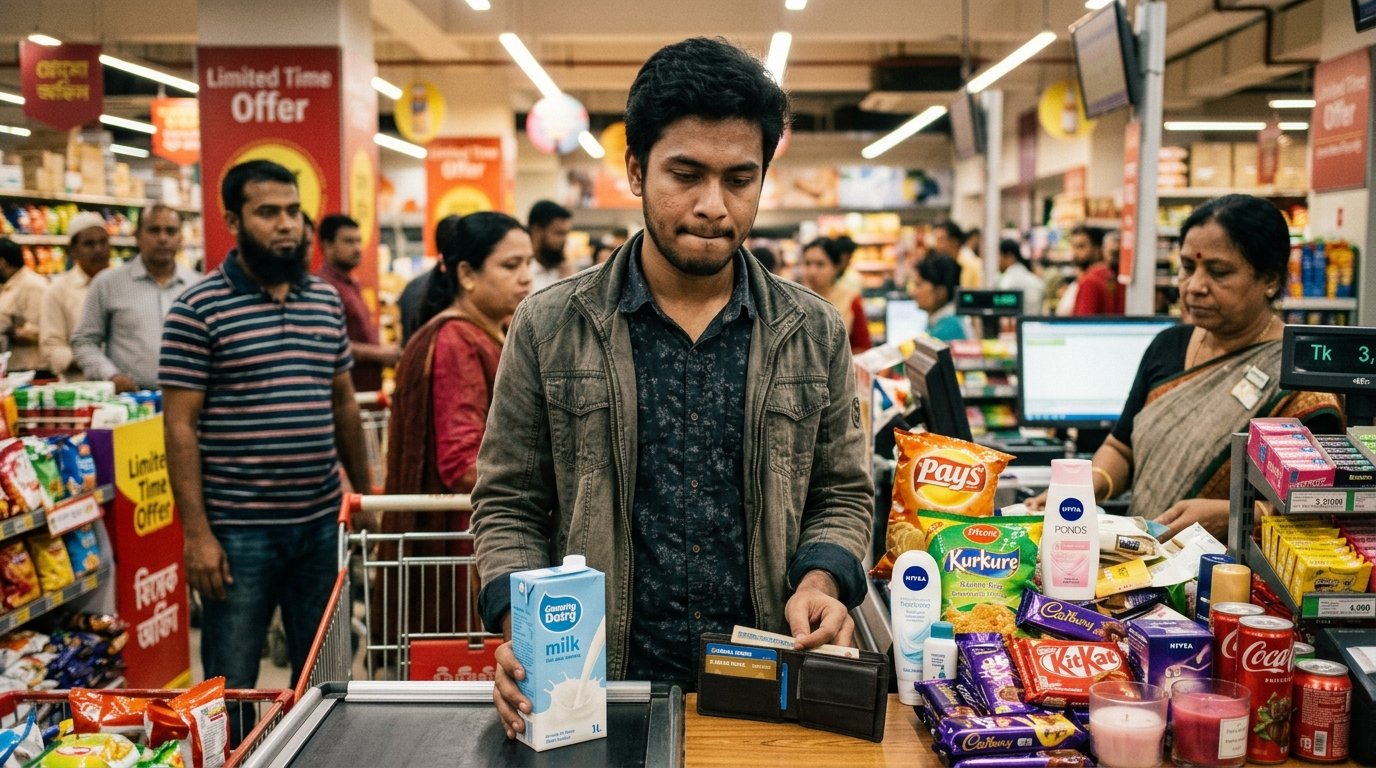
You went to the store for one carton of milk. You come home with a bag full of things that were never on the list. Or you’re scrolling your phone, a flash sale catches your eye, and within seconds you’ve typed in your card number. In the moment, it felt necessary. Back home, you realize it never was.
Almost everyone has lived this. And it’s not just a lack of willpower, there’s a genuinely complex mechanism running underneath it, one that retailers understand very well and use to their advantage. Let’s look at what actually happens behind a buying decision.
The brain’s reward system and two kinds of thinking
The moment you buy something, your brain releases dopamine, the same chemical released when you eat your favorite food or win a game. A study in the Journal of Consumer Research found that this rush of pleasure works much like receiving a small reward. Interestingly, a study in Neuron found that merely anticipating a good deal can spark the same excitement in the brain, even before you actually get the item.
Psychologist Daniel Kahneman explains that our thinking runs on two systems. System 1 is fast, emotional, and instant, while System 2 is slow, logical, and deliberate. Impulse buying happens exactly when System 1 overrides System 2 and takes control of the decision.
Why we shop when we’re feeling low
Research by psychologist Susan Nolen-Hoeksema shows that impulse buying often functions as a form of emotional regulation, a way of managing negative feelings. This is what’s known as retail therapy. In the moment of buying, a temporary sense of control returns, and the mind feels lighter. But that relief is short-lived, and chasing it again creates a cycle.
Why chocolate sits at the checkout counter
The reason chocolate and magazines sit at checkout counters comes down to decision fatigue. Making one small decision after another while shopping, which brand, which size, organic or not, wears down the brain’s capacity to decide. By the time you reach the counter, your reserve of self-control is nearly spent, and that’s exactly when small, cheap, tempting items become most persuasive.
Identity plays into this too. We see our possessions as a reflection of who we are. Economist Thorstein Veblen called this conspicuous consumption, buying to publicly signal social standing. In a modern context, this shows up as the pull to keep pace with friends, feeling the urge to buy something new the moment the people around you do.
The fix isn’t willpower, it’s a system
A Simply Psychology report notes that impulse spending isn’t a moral failing, it’s the brain’s predictable response to an environment specifically engineered to trigger buying decisions. So the fix has to come from a system too, not from willpower alone. Waiting 24 hours before a purchase, avoiding shopping when tired or upset, and checking each purchase against your own deeper values, these are the things that actually work.
Next time your hand reaches for the cart or the card on its own, pause for a second. Ask yourself, do I actually need this, or am I just trying to escape a feeling in this moment. Once you know the answer, control comes right back into your hands.