

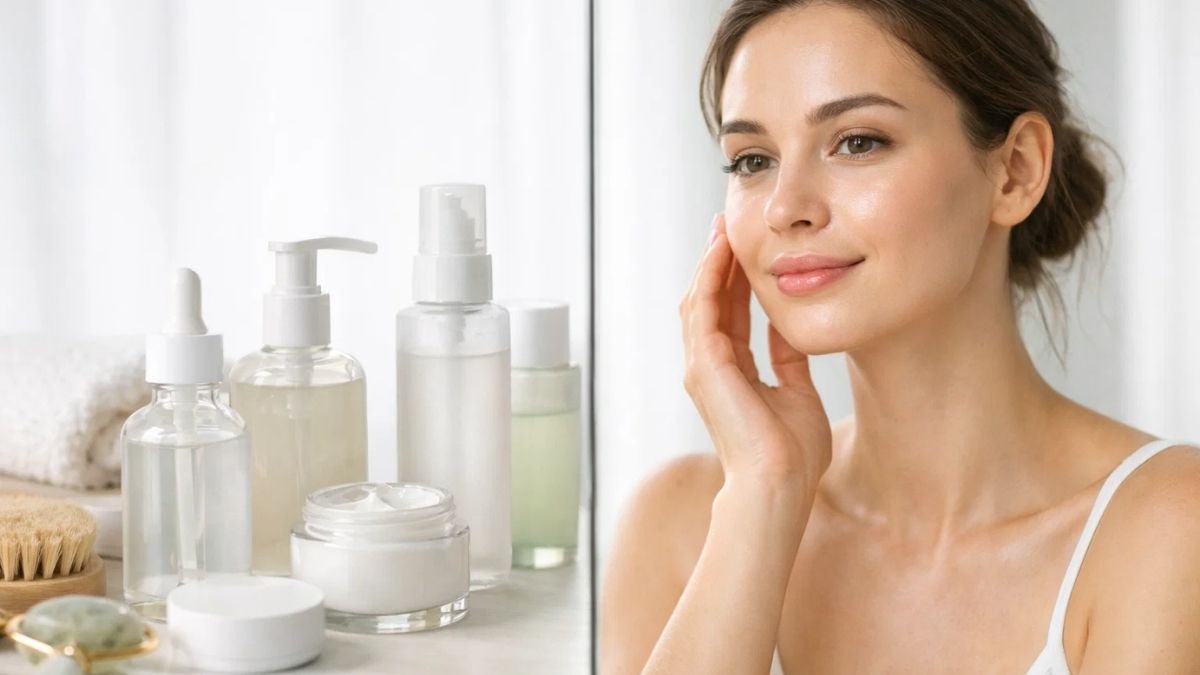
How many products are there in your skincare routine?
Cleanser, toner, serum, essence, eye cream, moisturizer, sunscreen—by the time you count them all, the number often crosses ten. The beauty industry has taught us one simple rule: more products mean better skin. But is that really true?
Every day, social media feeds us new skincare launches, ten-step Korean routines, and powerful active ingredients promising instant glow. Somewhere in this overload, we may have forgotten one important fact—our skin has its own natural defense system. And under the pressure of constant products, that system may be getting tired, confused, and less effective.
This is where a growing concept comes in: skin fasting—the idea that sometimes, your skin needs rest, not more care.
What Is Skin Fasting?
Skin fasting is the practice of temporarily reducing or pausing skincare products to allow the skin to rebalance itself naturally. Just as food fasting gives the body time to reset, skin fasting gives the skin space to recover its natural rhythm.
The concept gained popularity in Japan, where minimalism and natural beauty are deeply valued. The goal of skin fasting is simple: reset the skin, so it can function healthily without constant external support.
This doesn’t mean abandoning skincare forever. Skin fasting is a conscious break, where unnecessary products are removed while only the most essential care remains.
Why Does Skin Need a “Break”?
Your skin has a natural protective layer called the skin barrier, made up of oils, water, and beneficial bacteria. This barrier protects against pollution, bacteria, and moisture loss.
When we overload the skin with strong active ingredients—retinol, AHA, BHA, vitamin C—often all at once, this barrier can become damaged. The result? Dryness, redness, breakouts, irritation, and sensitivity.
Over-exfoliation is one of the biggest culprits. Many believe frequent exfoliation leads to smoother skin, but in reality, it strips away the skin’s protective layer. Similarly, excessive moisturizing can sometimes make the skin “lazy,” reducing its ability to produce natural oils.
The truth is, skin is a smart organ. When given the chance, it knows how to heal itself. Skin fasting simply creates that opportunity.
How Skin Fasting Works (The Science, Simply Explained)
Skin fasting isn’t just a trend—it has a scientific basis. When heavy oil-control products are stopped, sebum production gradually normalizes, preventing both excessive oiliness and dryness.
Reducing antibacterial and harsh products helps restore the skin microbiome, the ecosystem of good bacteria that keeps skin healthy. Skin cells naturally renew themselves every 28 days. Over-exfoliation disrupts this cycle, while skin fasting allows natural cell turnover to function properly.
By removing product overload, inflammation decreases, helping calm redness, irritation, and acne flare-ups.
Potential Benefits of Skin Fasting
When done mindfully, skin fasting can offer noticeable benefits. Breakouts and rashes may reduce, especially if they were caused by product overload. Sensitive skin often becomes more resilient, reacting less aggressively to environmental triggers.
Many people report that after an initial adjustment phase, their skin looks clearer and more naturally radiant. Perhaps most importantly, skin fasting helps you understand which products your skin truly needs—and which ones were simply marketing noise.
Is Skin Fasting for Everyone?
Skin fasting isn’t one-size-fits-all. It can be helpful for people with oily or sensitive skin, frequent product reactions, or those who feel their skin has become product-dependent.
However, caution is essential for anyone undergoing medical acne treatment or dealing with conditions like eczema, psoriasis, or rosacea. Extremely dry skin types should avoid full fasting and instead follow a minimal routine.
When in doubt, consulting a dermatologist is always the safest choice.
How to Practice Skin Fasting the Right Way
Skin fasting works best when done gradually. Start by eliminating non-essential products like toners, essences, or extra serums. Avoid stopping everything overnight.
A basic routine—cleanser, moisturizer, and sunscreen—should usually remain. In the morning, gentle cleansing, moisturizing, and sun protection are enough. At night, cleanse and apply a light moisturizer.
Beginners can try skin fasting for 3 to 7 days, or even practice it once or twice a week. The key is observing how your skin feels and responds.
Skin Fasting vs. Minimal Skincare
These two concepts are often confused, but they are different. Skin fasting is a temporary reset, a short break from most products. Minimal skincare is a long-term philosophy, focusing on using only what your skin genuinely needs.
If your skin feels overwhelmed or irritated, skin fasting can help reset it. After that, transitioning to a minimal routine often provides the best balance.
What Do Experts Say?
Dermatologists have mixed but balanced views on skin fasting. Many agree that “less is more” often works, especially for sensitive or reactive skin.
However, experts strongly emphasize that sunscreen should never be skipped. Sun damage remains the biggest threat to healthy skin. Their core advice is simple: listen to your skin. Tightness, burning, or excessive dryness are signs that something isn’t right.
Common Myths About Skin Fasting
You don’t have to stop every product completely—reducing unnecessary ones is enough.
Skin fasting isn’t laziness; it’s an intentional, mindful approach to skincare.
Done correctly, skin fasting doesn’t damage skin—it can actually strengthen it.
Trend or Real Need?
Is skin fasting just another beauty trend? Or is it something our skin genuinely needs? The answer is both.
While it gained popularity as a trend, the message behind it is important: we may be over-caring for our skin. Skin fasting acts as a reset button, reminding us that healthy skin doesn’t always require layers of products—just the right care at the right time.
True skincare isn’t about quantity. It’s about awareness. So the next time you look at the crowded shelf of products on your dressing table, pause and ask yourself: Does my skin really need all of this—or does it simply need a little rest?
Sometimes, the most powerful care is knowing when to step back.