

Picture a young person in a small room in Kurigram, typing a few words into a phone. A moment later, those words bloom into an image. Maybe it’s a riverbank at dawn, maybe a courtyard filled with the smell of a grandmother’s homemade pitha. Two decades ago, creating that picture would have taken expensive equipment, a big studio, and a move to the city. Today it takes an idea and the courage to express it.
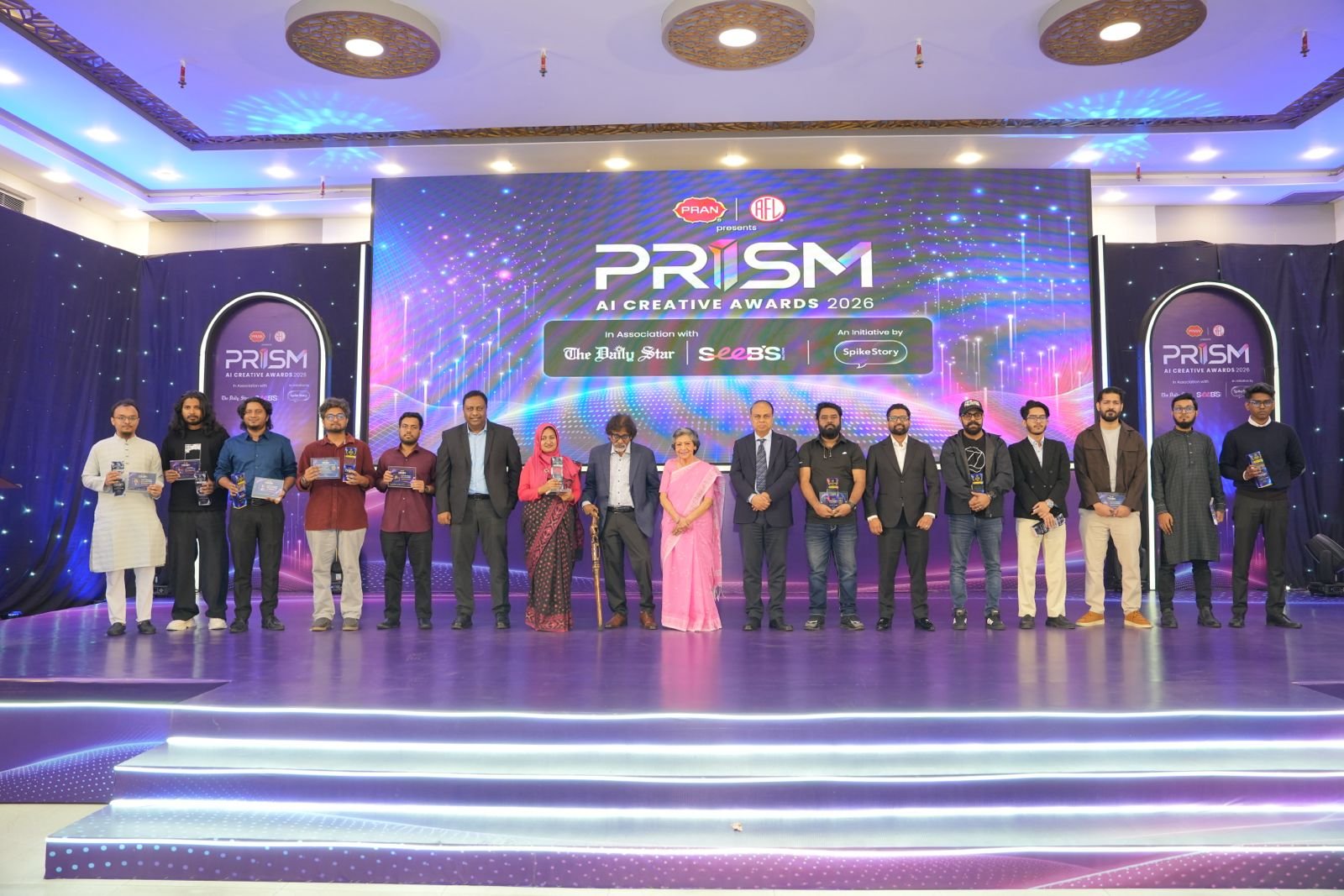
That courage is what PRISM AI Creative Award 2026 set out to reward. According to the organizers, more than 5,000 AI-generated works were submitted, from 27 districts across the country. From that pool, 60 finalists were selected.
The Faces Behind the Numbers
“5,000” is easy to read and easy to forget. Behind it are 5,000 late nights. Someone rewrote a single prompt twenty times to get one image right. Someone learned, from scratch, how to tell the story of their own soil in their own voice.
The reach across 27 districts matters too. It’s a reminder that creativity was never the property of one city. The talent was always there. What was missing was a stage.
More Than a Competition
The award was launched by PRAN-RFL Group this August, and a few things were clear from the start.
– Training: Workshops at universities and educational institutions taught prompt engineering, storytelling, and AI-powered content creation.
– Bootcamp: Shortlisted participants joined a two-day AI bootcamp covering AI tools, creative strategy, and storytelling.
– A long-term vision: The organizers have said they want to build a strong AI creator community. The prize, in other words, is a beginning rather than an end.
Partners include The Daily Star, 10 Minute School, the ICE Center of the University of Dhaka, and Bangladesh Open Source Network, among others. When this many organizations stand behind one effort, it signals that the effort is being taken seriously.
We’ve Seen This Potential Before
In 2025, Bangladesh held its first National AI Art-A-Thon with UNDP, where participants used AI to reimagine the country’s cultural heritage. UNDP’s Resident Representative stressed that Bangladesh’s diverse heritage deserves proper representation, not only by people but also by the AI systems we build and use.
That idea is worth sitting with. If AI learns only foreign stories, it will tell ours through foreign eyes. When a young Bangladeshi writes prompts in their own language about their own culture, they are teaching the technology who we are.
The Questions Are Real, and That’s Healthy
AI-generated art raises serious debates. What counts as originality? Who deserves the credit? Where does that leave handmade art? These questions shouldn’t be brushed aside. But having questions isn’t a reason to stand still. Technology is only frightening while it belongs to someone else. The people learning it today are the ones who will decide its limits and its responsibilities.
The 60 finalists may go home with trophies. But the real victory in this story belongs just as much to those who didn’t make the final list, yet saw their own idea appear on a screen for the very first time. Creativity can’t be measured in numbers. The day a young person realizes “my ideas matter” is the day a nation’s future shifts, just slightly.
So the next time someone scoffs, “What’s the point of making pictures on a phone?”, gently remind them: every great change began with someone’s small, brave experiment.