

Bangladesh’s story is a little different than what most people assume.
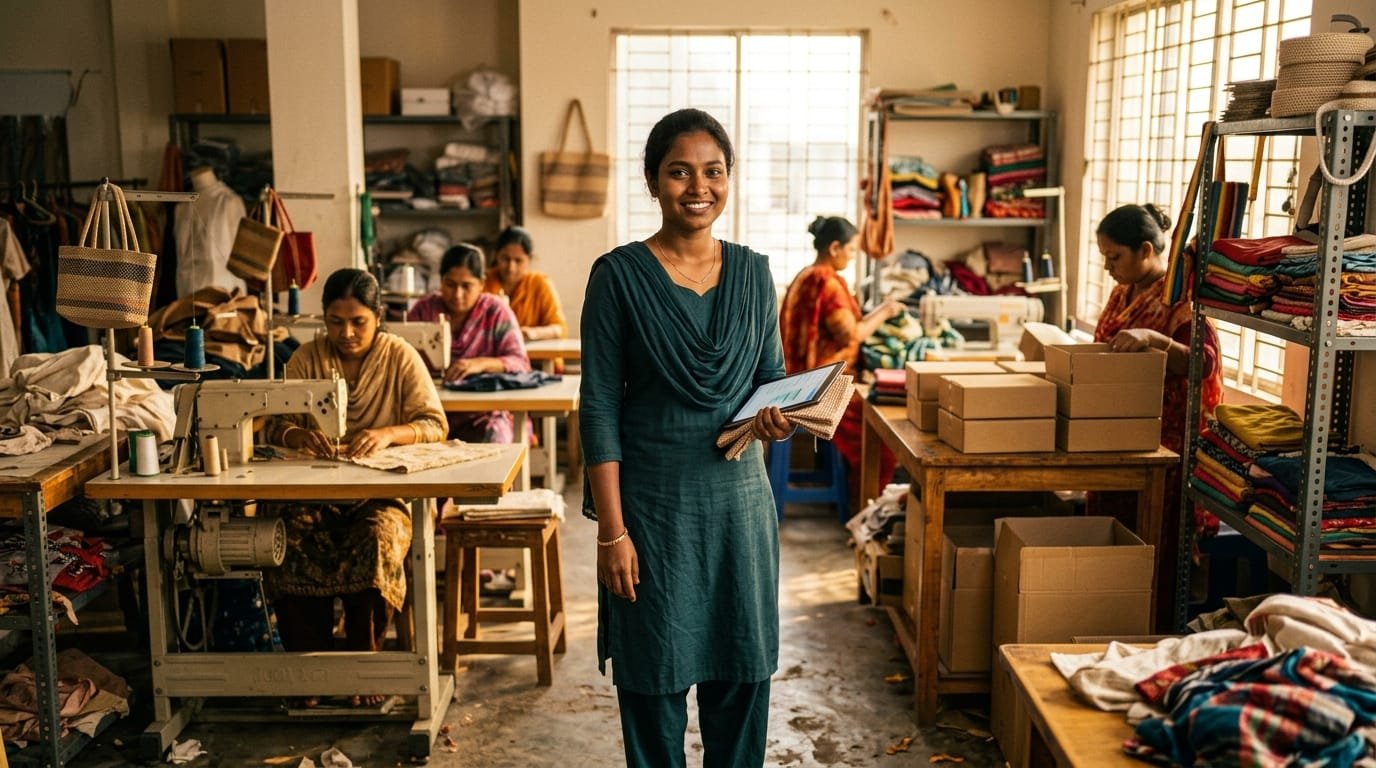
When we talk about the economy, the image that comes to mind is the towering chimneys of garment factories, remittances, or the names of big corporate houses. But the real story is hiding somewhere else. In the small workshop at the corner of a neighborhood, in an online boutique a woman runs from her living room, in a startup that began in a young man’s garage.
These are SMEs. And they are, in fact, the backbone of Bangladesh’s economy.
What the numbers say
According to a Bangladesh Bank study, SMEs contributed 24.45 percent of GDP in 2022, up from 23.36 percent in 2021. Other estimates put it higher, with SMEs accounting for 25 to 27 percent of GDP, while generating 80 percent of total industrial employment.
Think about that for a second. A quarter of the economy, but four-fifths of industrial jobs. That ratio alone explains why this sector can’t be ignored.
And the numbers aren’t just statistics, there are people behind them. The 2024 economic census counted close to 11.8 million economic units in Bangladesh, the vast majority of them micro, small, and medium enterprises. That means the livelihoods of millions of families are tied directly to this sector.
Why this sector matters so much
Building a large factory takes crores of taka in investment and years of planning. But starting an SME takes relatively little capital. A sewing machine, a laptop, or a small shop is often enough to begin.
That accessibility is exactly what makes SMEs Bangladesh’s most powerful tool for economic fairness. A woman who couldn’t find a job in the formal market has built an online business from home. A young man who got rejected by big companies started his own venture and is now the one creating jobs for others.
This truth became even clearer during Covid. As the formal job market shrank, thousands of new small ventures were born online, fighting simply to survive.
But the fight is still hard
Honestly, the story isn’t all rosy. According to the SME Foundation, the 2024 census found that more than 56 percent of small and medium enterprises in the country are still informal, meaning no access to bank credit, no legal recognition, no structure to make growth easier.
And the credit crunch is real. Banks are far more comfortable lending to large companies than to small entrepreneurs, who often lack collateral or any credit history.
A comparison with Vietnam makes the picture even sharper. Vietnam has fewer SMEs, but their average output is far higher, because the sector there is more organized and receives more institutional support. Bangladesh has more SMEs in absolute numbers, but the average productivity per enterprise is much lower. The problem isn’t quantity, it’s capacity.
The 2030 dream
The government and the SME Foundation are aiming to raise SMEs’ contribution to GDP to 35 percent by 2030. That target won’t be easy, but it isn’t impossible either, if digital banking, simpler credit processes, and skills training actually reach these entrepreneurs.
Because behind every number in this sector is a story. Someone running their household on this small business, someone else building the foundation of tomorrow’s next big brand.
If Bangladesh’s economy is a body, SMEs are its backbone. Maybe not the most talked-about part, but the one holding the whole body upright. And the stronger this backbone gets, the more firmly Bangladesh’s economic future will stand on its own feet.