

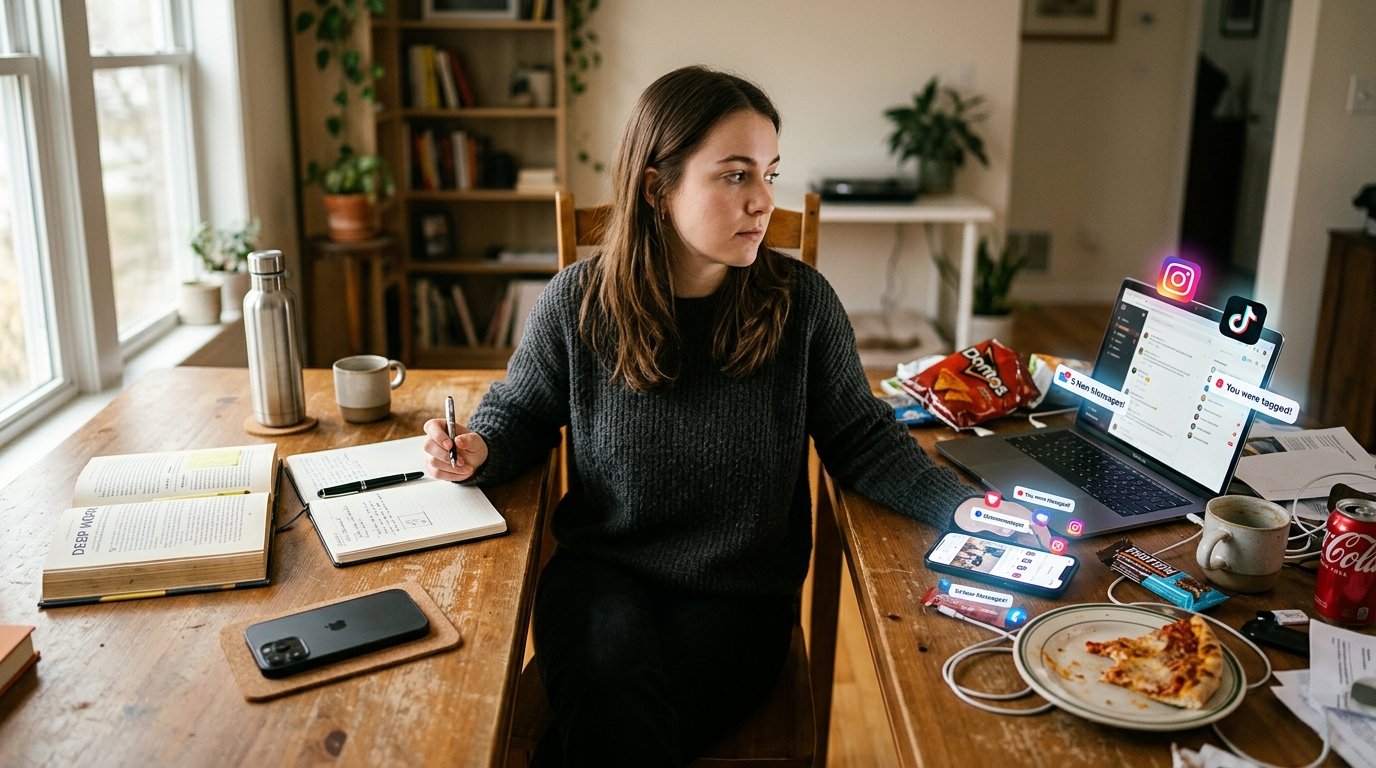
We like to believe that every decision we make is entirely our own, driven purely by willpower. But reality is a little different.
The places around us, the way objects are arranged, even the lighting in a room quietly influence what we do. Once you understand this, the way you see your life changes completely. Because you realize that before trying to change yourself, it’s often much easier—and far more effective—to change your environment.
Cornell University researcher Brian Wansink found that people make around 200 food-related decisions every day, yet most of them aren’t conscious decisions at all. They’re influenced by the environment around them. The size of a plate, the distance to food, even the color of the lighting can affect how much people eat. So let’s explore how our environment shapes our decisions—and how we can use that knowledge to our advantage.
Willpower Is a Limited Resource
Many people believe that strong willpower is all they need. But psychologist Roy Baumeister’s research suggests that willpower works like a muscle—it becomes fatigued the more you use it throughout the day. This idea is known as ego depletion. That’s why late at night, when willpower is at its lowest, we’re more likely to make poor decisions: scrolling endlessly on our phones, eating unhealthy snacks, or abandoning our plans.
Reduce Friction to Make Good Habits Easier
If you lay out your gym clothes the night before, you’re far more likely to go to the gym in the morning. Why? Because you’ve already removed one obstacle. BJ Fogg’s research shows that the easier a behavior is to perform, the more likely you are to do it. This principle is known as friction reduction—eliminating barriers that stand in the way of good habits.
Distance Changes Decisions
When a bag of chips is sitting in plain sight, you’re much more likely to eat it. Put it on the top shelf of a cupboard, and that likelihood drops dramatically. This simple principle applies to almost every habit. Keep what you want to do more of close by, and place what you want to do less of farther away.
Visibility Is a Powerful Reminder
There’s a huge difference between leaving a book on your desk and hiding it in a drawer. Whatever stays in front of your eyes naturally gets your brain’s attention. So if there’s a habit you want to build, keep the tools for it visible and remove unnecessary distractions from your surroundings.
Your Social Circle Is Part of Your Environment
Your environment isn’t just your physical space—it’s also the people around you. Researchers Nicholas Christakis and James Fowler found that our habits are deeply influenced by the habits of our friends. The people you spend the most time with gradually shape the way you think, behave, and make decisions.
Your Digital Environment Matters Too
The apps on your home screen, the notifications that constantly appear, and the layout of your phone all create a digital environment. Simply moving distracting apps to another screen can noticeably reduce how often you use them, because you’ve added a small amount of friction.
Change It Once, Benefit Every Day
One of the greatest advantages of designing your environment is that it’s usually a one-time effort. You don’t have to decide every morning whether you’ll go to the gym if your workout clothes are already waiting for you. Good decisions become habits without requiring a daily battle.
You don’t have to change yourself as much as you think.
Sometimes, all you need to change is your environment. Bring a book closer. Move your phone farther away. Surround yourself with people who inspire you to become better.
Because life isn’t built on a few big decisions. It’s built on the small environments we live in every single day.
And the power to shape that environment is entirely in your hands.